
Why Reading the Ingredients List Matters More Than Ever
Turn over almost any package in the supermarket and you’ll see a lot of words - some you can pronounce, others that sound more at home in a lab than a kitchen.
And while front-of-pack claims get louder and flashier, the ingredients list is where the truth lies.
The Front Is Marketing. The Back Is Reality.
The front of a package is designed to catch your eye.
But words like natural, premium, or better-for-you don’t have much meaning on their own, because they’re not regulated in the way people often assume.
Brands can make bold claims that may have some truth, but don't tell you the full story.
The ingredients list, however, is required by law to show what’s really inside - listed in order of quantity, from most to least.
It’s the one place brands can’t hide behind good intentions or clever marketing speak.
Why Ingredients Lists Keep Getting Longer
So why does the food we eat need so many ingredients?
Often, it doesn’t.
Long ingredient lists are usually made up of stabilisers, emulsifiers, flavour enhancers, and fillers that...
• Speed up production
• Extend shelf life
• Bulk out the product
• Create consistency at massive scale
In other words, they’re there to make food cheaper, faster, or more uniform.
Take Chocolate For Example...
Many modern chocolate bars include a surprising number of artificial ingredients to make large-scale production easier.
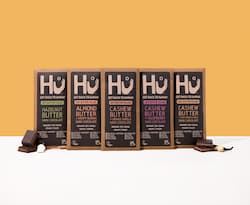
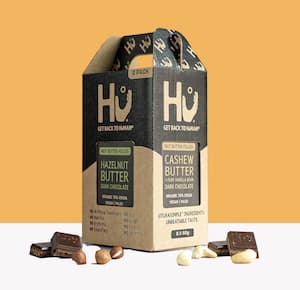
But here at Hu, we believe that chocolate should only contain what it needs to taste great.
That's why our Simple bars only contain 4 real ingredients: organic cocoa solids, organic fairtrade cocao, organic cocoa butter and organic unrefined coconut sugar.
Our other bars contain things like organic nuts or mint oil, but that's it.
Real ingredients that you can pronounce (and might even have knocking about in your kitchen cupboards).
No muss, no fuss, and certainly no nasty stuff.